graveyard

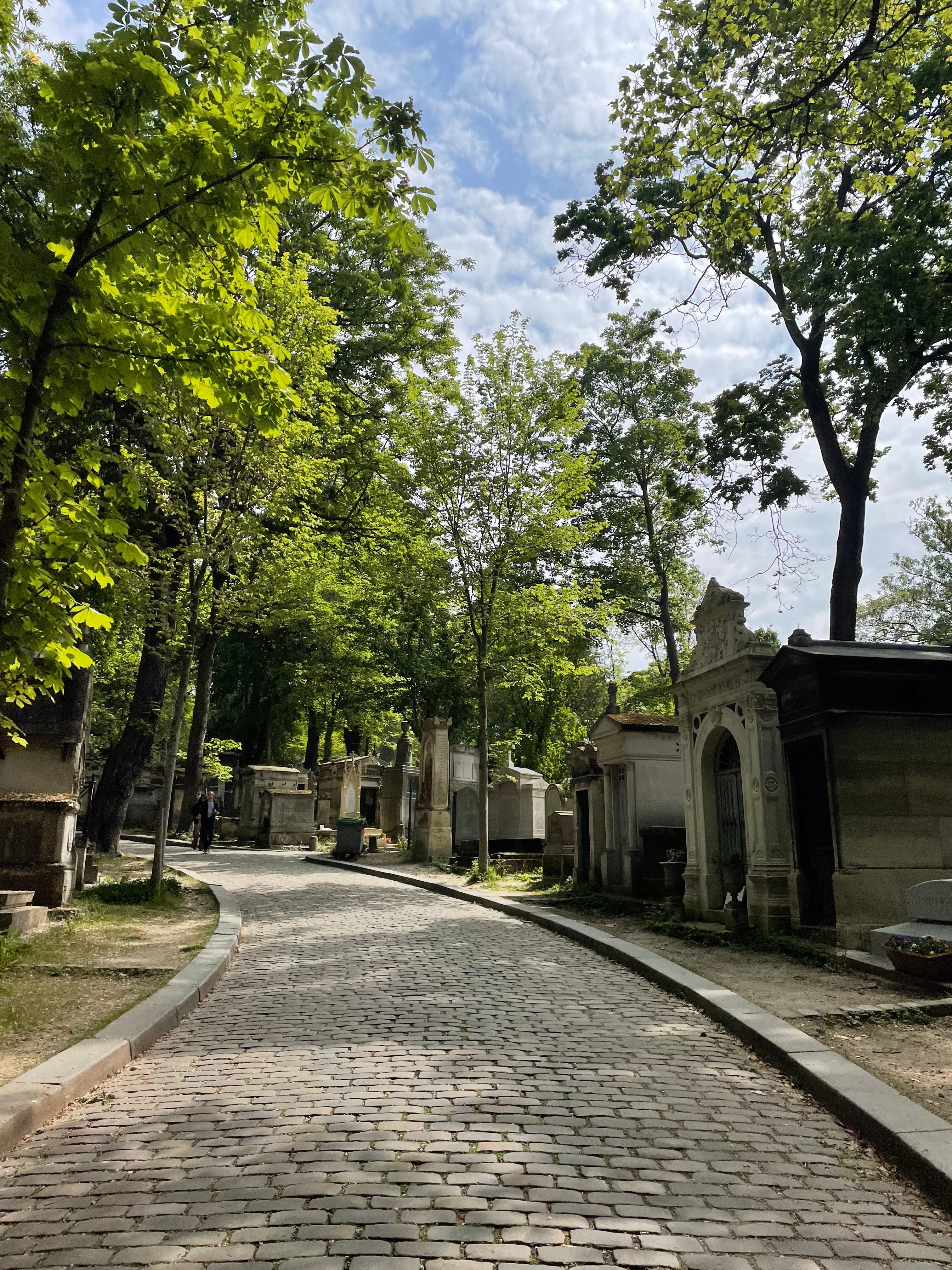
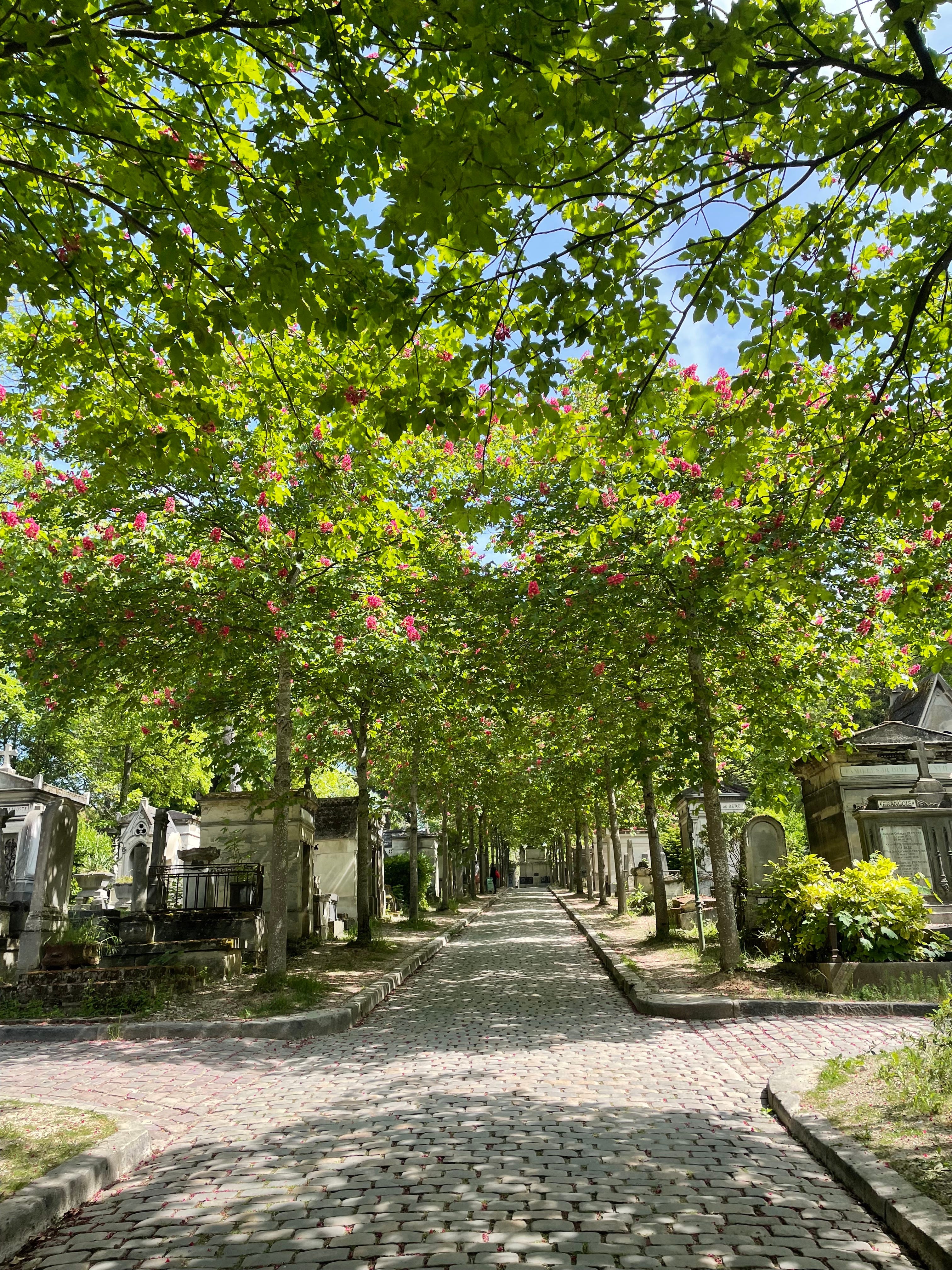
Cimetière du Père Lachaise is a beautiful place. It is a graveyard situated on 110 acres of land. It is both the largest park and the largest cemetery in Paris. Reading about it before our trip I learned that it receives 3.5million visitors per year. I imagined a queue of warm, tired tourists traversing the cobbled walkways, following some unknown leader to the graves of Jim Morrison and Proust. Much like our experience of going to the Louvre and being funnelled through a maze of corridors along with hundreds of other Mona-Lisa-seekers.
Songbirds: high on their blue-sky backdrop. Cherry blossom: clinging to trees and swirling in the breeze. Feet: aching from yesterday’s miles. Graves everywhere.
We almost didn’t go. It was a bit out of our way—on the other side of the river from our hotel and not nearby any other attractions or restaurants or boulangeries I had on my list to visit. I said to T though, the night we arrived in Paris over glasses of perfectly room temperature red wine outside a busy restaurant in the Marais district, that I somehow felt called to the cemetery. I felt ripe with inspiration just from being in such a creatively historic city. So much of the canon is made up of writers who have lived or spent extended time in Paris, people watching from behind dark glasses and cups of espresso. The chairs that sit outside the cafes across the city face outwards. Encouraging the act of noticing. Perhaps I could find some clarity in the cemetery’s morbid embrace.
And while the subject of death preoccupies me regularly, I’d found myself recently feeling more interested in life than its murkier counterpart. I felt connected, there in Paris, and the prospect of wandering around a graveyard amid more than 5000 trees and over 1,000,000 buried bones seemed an opportunity to juxtapose life and death in a very literal way.
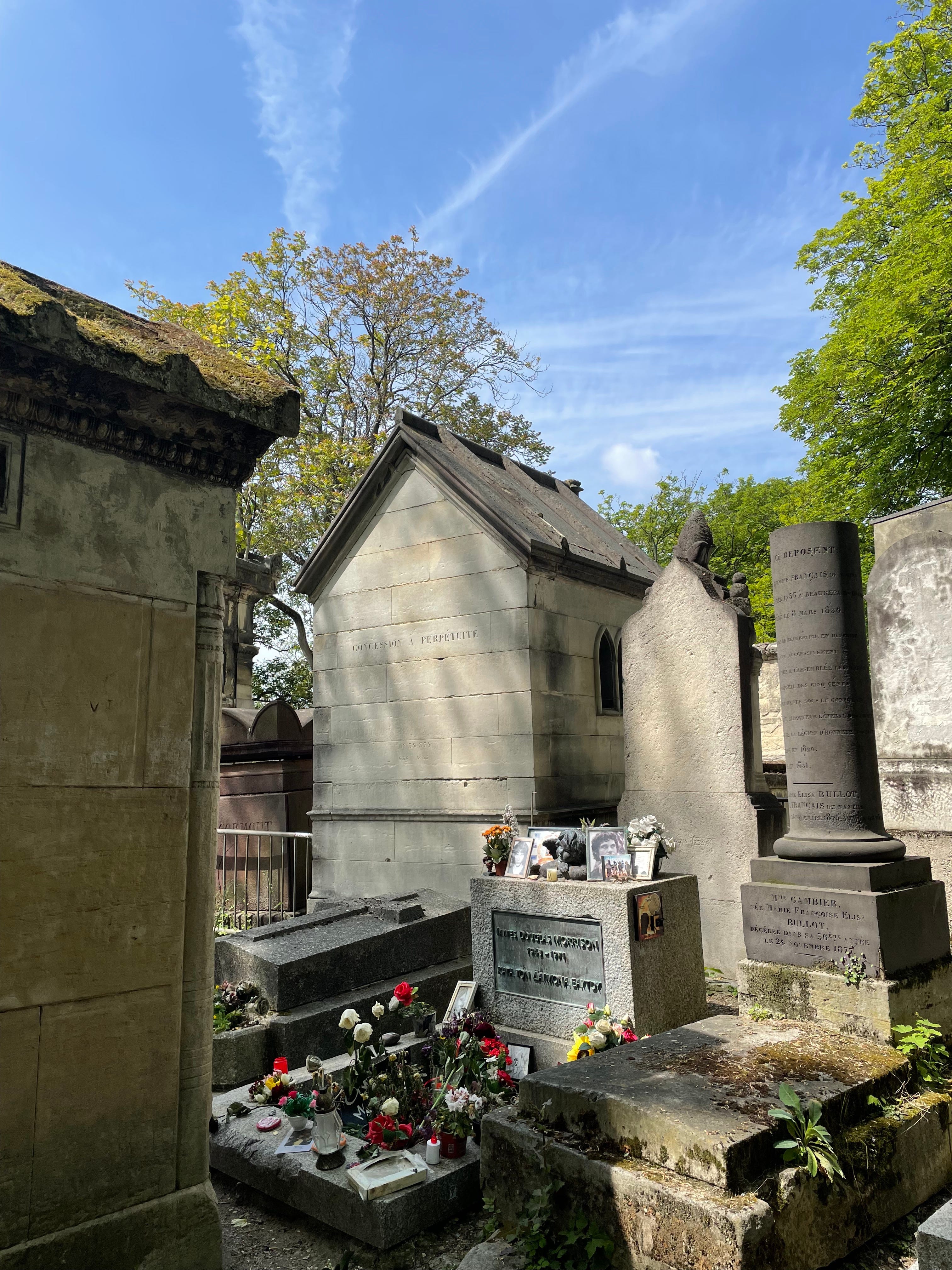
My tired feet took the cobbled lanes between mausoleums and headstones slowly, respectfully. Names and dates and fresh flowers flashed past—tens, then hundreds, then thousands of souls laid to rest. Other human beings living in slightly different times. There was hardly anyone else around. It’s probably busier in the height of summer but that day there were only a few mourners, some other tourists taking photos of Jim Morrison’s grave, and a woman writing in a notebook on a bench in a patch of hot May sun. Our living breathing bodies mere visitors in the home of the dead.
From the moment we are conceived the only thing we can be certain of is that we will one day die. We don’t know when it will be, but we know that it will happen. All are from the dust, and to dust all return. Since my mum and dad’s multiple near-death experiences in recent years I’ve become even more preoccupied with the subject than ever. But I pivot between seeking out reading material on the topic, hungry for information and insight that will still my anxious brain, and ignoring the books about death that already sit on my shelves, certain that the reading of them will bring the darkness too close.
That day in Paris, though—and perhaps the wine was to blame—I wanted to walk amongst the dead. As close as we can get, perhaps, while still alive.
***
I write, now, having been back home for a couple of weeks, and during that time cancer campaigner Deborah James has announced to her thousands of Instagram followers that her death is imminent. She said in a recent podcast recording—her last—that when the time comes the nurses will give her sedatives and she will slip away. That she wants to die listening to the sounds of her family, the normal buzz of life.
Deborah has been on my mind almost constantly. I’ve been thinking about her and her family and hoping they are as okay as they can be. But I have also been considering what she is reimagining—what seems to be a new way to die. One that involves Instagram posts and spray tans and always-manicured nails. More often you don’t hear about someone’s death until after it’s happened. It is rare to watch someone dying from afar, in the very way that they lived: through newspaper interviews and incredible fundraising efforts and photos on a social media platform. It is as if she is saying: death does not need to be hidden from view until it is buried 6 feet under and covered in flowers.
As I’ve been contemplating both my desire to walk amongst thousands of headstones and the way a social media star with cancer approaches her own death, I am struck by one particular commonality: in the face of death, we strive for peace. And peace, really just means the things that are good about life. Blue skies. Bird song. The gentle hum of your loved ones chatting in the background. More contentment, more joy, more colour, more lipstick, more sunshine, more rain, more of it all. And in so doing, life is not the opposite of death at all. It is its bedfellow. And we can easier accept both, right alongside each other.